If a floor, ceiling, wall or roof may be failing, get everyone out of that area and the space below it, do not add load or try to push anything back, and call 911 if collapse seems imminent. Then call a structural engineer or an emergency contractor who can install temporary shoring: posts, beams and cribbing that carry the load safely to solid ground until a permanent repair is designed.
- People first: clear the area and the space beneath it; call 911 if collapse seems imminent.
- Shoring holds a structure where it is; it does not lift or straighten it.
- Temporary posts need solid bearing; a thin slab or soft ground under a shore can fail.
- Photograph everything before and after shoring for the engineer and your insurer.
- Shoring is temporary; a permanent repair still needs design and, usually, a permit.
01 /What counts as a structural emergency?
A structural emergency is any situation where part of the house may be about to move suddenly or collapse. The signs are usually loud, fast or obvious, and they often follow an event.
- Cracking, popping or groaning sounds from framing, especially under snow or after a change.
- A ceiling or floor visibly sagging more by the hour or day, or a bulge in a ceiling.
- A basement wall moving, blocks displacing, or soil or water pushing through.
- Doors that suddenly jam in several rooms at once, with fresh cracks.
- A split or broken beam, joist or rafter, or a post that has kicked out.
- After a vehicle impact, fire, flood, burst pipe, heavy snow or a wall removed without support.
Slow, long-standing problems, such as a floor that sagged years ago and has not changed, are not emergencies, even if they look bad. The signs of structural damage guide and the Structural Warning Sign Triage help separate the two; the triage places a combination of serious signs, quick change or heavy snow with a sagging roof in its Urgent band.
02 /What should you do first?
- Get people out
Move everyone, including pets, out of the affected area and out of the space below it. If you are unsure how far the risk extends, leave the house.
- Call 911 if collapse seems imminent
Emergency services can assess immediate danger, and fire services deal with structural collapse, gas leaks and trapped people.
- Shut off utilities only if safe
At any hint of a gas odour, get everyone out and phone the gas utility once you are outside. Turn off electricity at the panel only if you can reach it from a dry, safe spot. Close the main water valve if a pipe has burst.
- Do not add load
Do not walk on a sagging floor, climb onto a sagging roof, or stack salvaged items on the floor above the problem.
- Do not push anything back
Jacking a failed beam or pushing a wall back without a plan can release it suddenly.
- Call for help
A structural engineer, an emergency or restoration contractor with shoring experience, and your insurer. Many restoration firms and some engineers offer emergency response.
- Document
Photos and video from a safe position, the time, and what happened, before anything is moved.
| Situation | First moves after clearing people |
|---|---|
| Vehicle hit the house | Leave the vehicle in place unless emergency services move it; it may be holding the wall up. Call 911 and your insurer. |
| Roof sagging under heavy snow | Keep everyone out of the top-floor rooms below; do not climb on the roof or rake from a ladder under the sag. |
| Burst pipe soaking a ceiling | Shut the main water valve; keep clear of the bulge and any light fixtures in it; switch that circuit off at the panel from a dry spot. |
| Basement wall moving or blocks displacing | Stay out of the basement near that wall; keep vehicles and snow piles away from that side outside. |
| Floor dropping after a wall was removed | Keep people and furniture off that floor; rebuild temporary support only if a trained person can do it without going under the load. |
03 /How does temporary shoring work?
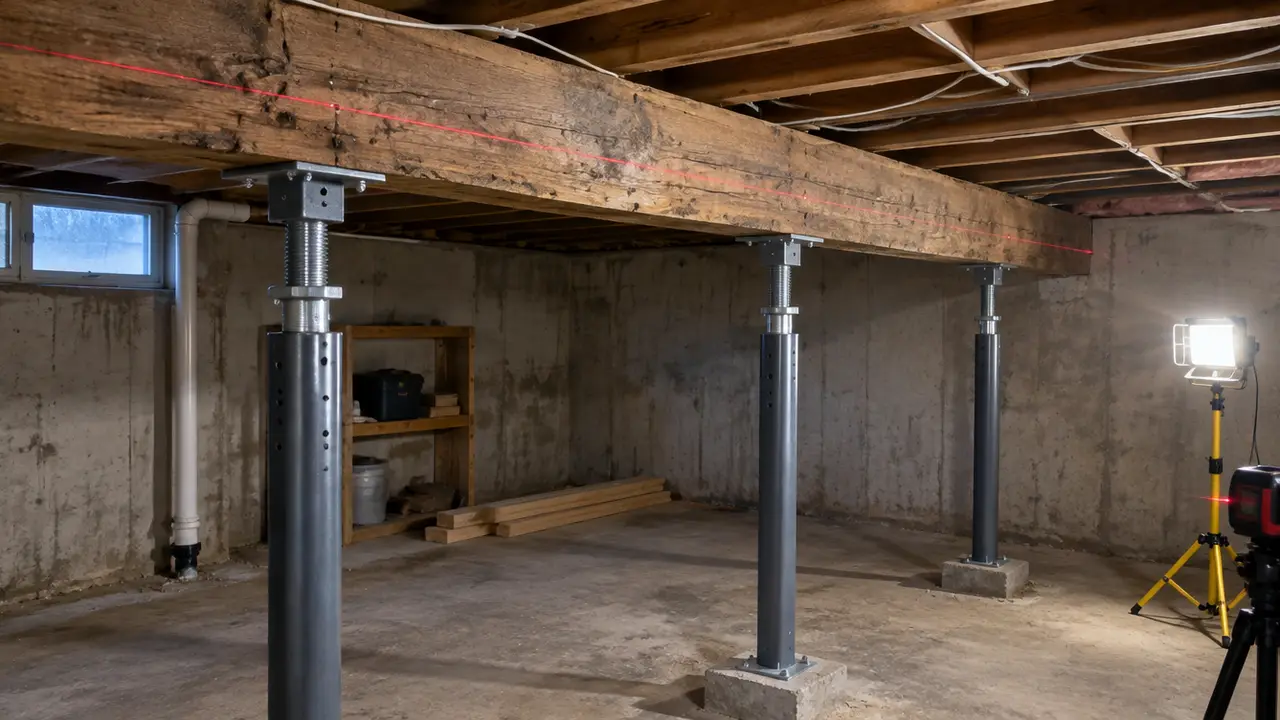
Temporary shoring is a set of posts, beams and bracing that picks up the load from a damaged or overloaded part of the structure and carries it straight down to something solid. It is installed snug to hold the structure where it is, not to lift it. The shoring must be at least as continuous as the original load path: a shore under a sagging floor has to bear on a floor or ground that can carry it, and any floor it bears on may need shoring below as well.
| Component | Purpose |
|---|---|
| Spreader or header beam | Spans across several joists or rafters so the load is shared, not concentrated on one member |
| Adjustable shoring posts or timber posts | Carry the load vertically; adjustable posts are set snug, not used to lift |
| Sill plates and pads | Timber or steel under posts to spread load over a slab or floor |
| Cribbing | Stacked timbers in a box pattern for heavy loads or where height is uneven |
| Bracing | Diagonal members that stop posts from kicking out sideways |
| Temporary stud walls | Continuous support under a ceiling while a wall or beam is replaced |
On a basement slab, shores stand on timber pads or plates that spread the load, because a concentrated post load can punch through a thin slab. Outdoors or in a crawl space, shores may need cribbing on compacted ground. For a bowing foundation wall, temporary shoring is typically diagonal rakers from the slab to the wall, or bracing to floor framing, set by the engineer.
04 /Who installs emergency shoring?
Emergency shoring is installed by contractors experienced in structural work: restoration companies, general contractors, foundation contractors and framers who do this regularly, ideally working to a structural engineer's instructions. In a true emergency the contractor may install conservative shoring first and the engineer reviews it within hours or days.
- Structural engineer. Assesses the risk, decides where and how shoring goes, and later designs the permanent repair.
- Restoration contractor. Often first on site after fire, flood or impact, especially through an insurance claim.
- General or foundation contractor. Installs shoring and then builds the permanent repair.
- Your insurer. May have preferred restoration firms and will want documentation and cost records.
Ask whoever installs the shoring to tell you in writing what it is holding, what it must not be disturbed for, and how long it can stay. Shoring left for months in a cold or damp basement can loosen as wood shrinks; it should be checked and re-snugged on a schedule the engineer sets.
05 /What comes after shoring?
After the structure is secure, the work shifts to diagnosis and a permanent repair. The engineer determines the cause and designs the repair: sistering, a new beam, posts and footings, wall bracing, underpinning or roof reinforcement. The permanent work usually needs a building permit; see structural repair permits.
- Engineer's assessment and written recommendations.
- Insurance claim decisions, where the event is covered.
- Repair design and permit.
- Contractor quotes on the same scope.
- Construction, inspections, and removal of shoring once the permanent structure carries the load.
- Engineer's completion letter for your records.
| Item | Typical planning range |
|---|---|
| Emergency engineer's visit (after-hours premium may apply) | $750–$2,500 |
| Temporary shoring of a floor or beam line | $1,000–$5,000 |
| Complex shoring (walls, roofs, multiple levels) | $5,000–$20,000+ |
| Shoring rental for an extended period | Varies; ask for a weekly rate |
For the costs of permanent repairs, see the structural repair cost guide. StructuralRepair.ca is part of HAUSE Home, an independent information and service-request network; it does not dispatch crews. In an emergency call 911 first; for next steps afterwards, send a request.
FAQQuestions people ask
What is emergency shoring?
Temporary posts, beams, cribbing and bracing installed to carry the load of a damaged or overloaded part of a building safely to the ground until a permanent repair is built.
Should I call 911 for a sagging ceiling?
If collapse seems imminent, with cracking sounds, rapid sagging, or people or utilities at risk, yes. For a slow, stable sag, get people out of the area and call a structural engineer or contractor instead.
Can I shore a sagging floor myself?
It is risky. The dangerous moment is placing the shore, directly under the load. If the floor is actively moving or members are broken, leave it to experienced contractors working with an engineer.
Can I use a car jack or bottle jack to hold up a beam?
No. Vehicle jacks and bottle jacks are not shoring. Use rated shoring posts or timber posts on proper pads, with bracing, installed by someone experienced.
How long can temporary shoring stay?
Only as long as needed to design and build the permanent repair. It should be inspected and re-snugged periodically, on a schedule the engineer or contractor sets.
Does insurance pay for emergency shoring?
When the cause is a sudden, covered event such as fire or a burst pipe, emergency measures are often part of the claim. For gradual problems, usually not. Confirm with your insurer early.