Fire, water and rot all reduce the working cross-section of wood framing, and fire can also weaken steel and connections. After an event, an engineer or experienced assessor decides member by member what can stay, what can be reinforced by sistering and what must be replaced. With water and rot, the source is stopped and the wood dried or removed first, or repairs will fail again.
- Do not re-enter a fire- or flood-damaged house until the authorities and your insurer say it is safe.
- Charred wood loses the charred depth and a little more; engineers assess the remaining sound section.
- Wet framing is weaker while wet but usually recovers when dried, unless rot or mould has set in.
- Rot needs a moisture source; fix the water, then remove soft wood and reinforce or replace.
- Insurance generally follows sudden and accidental events, not gradual rot or long-term leaks.
01 /How does fire damage house framing?
Fire damages framing by burning away wood, heating members and connections, and leaving smoke and water damage behind. Solid wood chars from the outside in; the char layer insulates the wood beneath, so a heavy joist or beam can keep much of its core even after a serious fire. What matters structurally is the remaining sound cross-section once the char and the heat-affected layer beneath it are removed.
| Material | Typical fire behaviour | What an assessor checks |
|---|---|---|
| Solid sawn joists and beams | Char from the surface inward; the core often survives | Char depth, remaining section, splitting, fastener condition |
| Engineered I-joists | Thin webs and flanges can lose capacity quickly | Usually replaced if exposed to significant fire |
| Trusses with metal plates | Plates can heat and pull out of thin members | Plates, member char, any distortion |
| Steel beams and posts | Lose strength and stiffness at high temperature; may distort | Straightness, deformation, connections, fire protection |
| Concrete foundations | Surface spalling; heat can weaken the outer layer | Spalled areas, exposed reinforcement |
Smoke and soot on framing are cleaned, and odour is sealed, but they are not structural damage. Water from firefighting soaks framing and drywall, adding the water problems below. Engineers typically map the house, noting for each member whether it is sound, can be cleaned and kept, needs reinforcement, or must be replaced.
02 /How does water damage affect framing and foundations?
Water affects structure in three ways: wet wood is temporarily weaker and more flexible, water that stays leads to rot and mould, and moving water can scour soil from under slabs and footings. A flood that is cleaned up and dried quickly often leaves solid wood framing structurally sound. The same wood kept wet for weeks behind drywall and insulation may not be.
- Dry quickly. Health Canada advises that a house and furnishings are less likely to grow mould if they are dried within 48 hours. Flood-soaked drywall, insulation and particleboard that cannot be dried are removed.
- Measure before closing up. Framing is dried until moisture meter readings are back in a normal range for dry lumber before walls are closed; the restoration contractor or assessor sets the target.
- Watch engineered wood. OSB subfloors and the webs of I-joists can swell, delaminate or lose strength after long soaking and are often replaced.
- Check under slabs and footings. Flowing water and burst pipes can wash out soil; hollow-sounding slabs, new cracks and settlement after a flood point to voids.
- Check the bottom plates and sills. They sit lowest, stay wet longest and are the first places rot starts.
- Check steel posts and beam ends. Flood water left standing around post bases starts rust; see concrete and steel structural repair for when rust means lost steel.
03 /How does rot damage structure, and where do you find it?
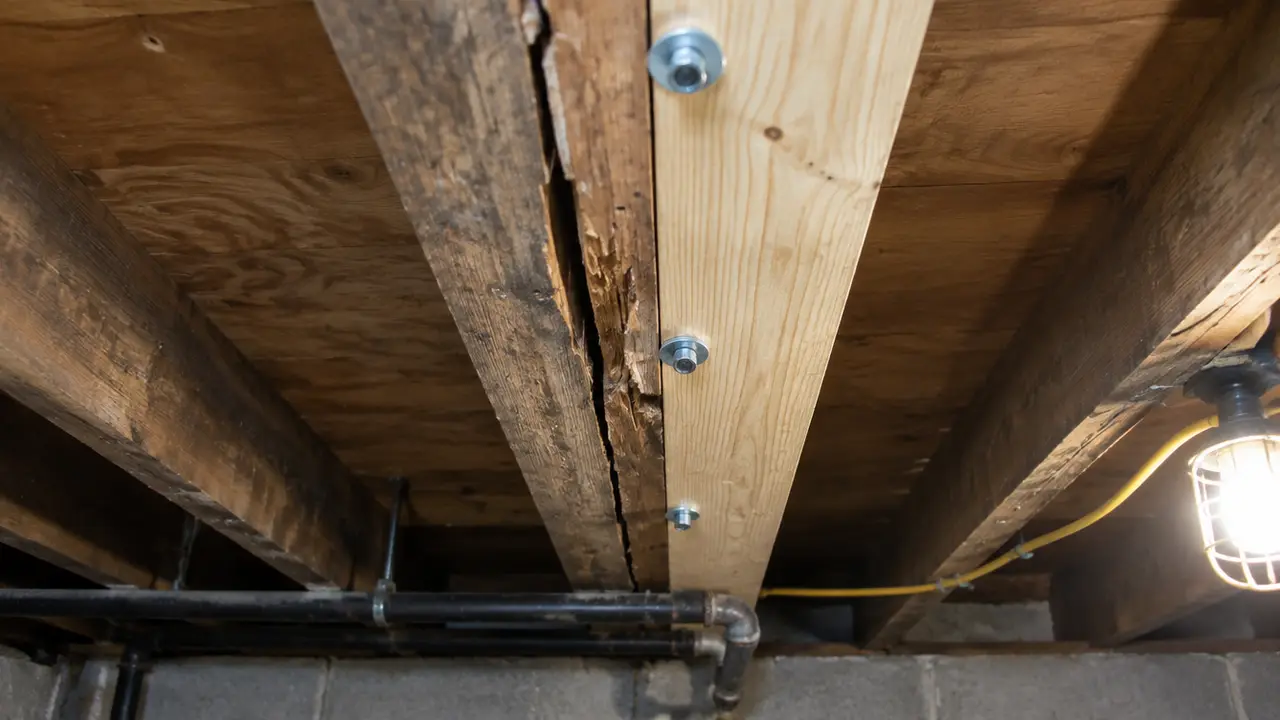
Rot is fungal decay that feeds on wood kept damp for long periods. Decayed wood loses strength long before it looks destroyed; brown rot leaves wood dark, cracked into cubes and crumbly when dry, while white rot leaves it pale and stringy. Either way, the load-carrying section shrinks. Rot needs moisture, so every rot repair starts with finding the water.
| Location | Typical water source |
|---|---|
| Sill plates and rim joists | Poor grading, snow piled against walls, leaks at the foundation top, condensation |
| Joists and subfloor under bathrooms | Toilet, tub and shower leaks over years |
| Posts in basements and crawl spaces | Wood in contact with damp concrete or soil |
| Framing around windows and doors | Failed flashing and sealant; water behind siding or stucco |
| Deck ledgers and attached porches | Missing flashing where the deck meets the house |
| Roof sheathing and rafter tails | Roof leaks, ice dams, attic condensation |
Probe suspect wood with an awl or screwdriver. Sound wood resists and splinters; decayed wood lets the tip sink in easily. Also look for frass (sawdust-like debris) and galleries, which indicate carpenter ants, and in some parts of the country, termites. Insect damage is assessed and repaired like rot, after the infestation is treated.
04 /How is damaged framing repaired?
Damaged framing is repaired by reinforcing what can stay, replacing what cannot, and making sure the load path is continuous. The choice for each member depends on how much sound section remains and where the damage sits along its span.
- Stop the cause
Repair the leak, grading, flashing or plumbing; dry the structure; treat insects.
- Shore
Temporary posts or walls carry loads while damaged members are cut out. See emergency shoring.
- Remove damaged material
Cut out rotted, charred or crushed wood back to sound material, and remove wet insulation and drywall.
- Reinforce or replace
Sister joists and rafters with sound wood extending beyond the damage, replace sills and plates by jacking walls slightly, replace I-joists and trusses to the manufacturer's or engineer's detail.
- Protect
Use treated wood where it will touch concrete or soil, add flashing and membranes, and improve ventilation where condensation caused the problem.
- Inspect and document
Structural repairs usually need a permit and inspection. Keep the engineer's letter and photos for your insurer and future buyers.
Sistering techniques are covered in sistering floor joists, beams and posts in fixing a sagging floor with a beam, and roof framing in roof sag and truss problems.
05 /Does insurance cover fire, water and rot damage?
Home insurance is built around sudden and accidental events. Fire is a standard insured peril. Water damage usually covers the sudden and accidental escape of water from plumbing, heating, sprinkler or air conditioning systems, domestic appliances or a water main; overland flooding and sewer backup are often separate optional coverages. Gradual deterioration, rot from long-term leaks and wear and tear are generally not covered, because the Insurance Bureau of Canada notes a policy is not a maintenance contract. Always read your own policy and talk to your insurer or broker. For settlement, creep and other gradual problems, and for new-home warranty claims, see does insurance cover structural repairs.
- Report the claim promptly and record the claim number.
- Photograph and video the damage before cleanup, and keep damaged materials or photos until the adjuster says otherwise.
- Ask whether the policy covers a structural engineer's assessment, and make sure the scope of repairs follows the engineer's findings.
- Keep invoices, moisture logs, engineering letters and permit records together.
| Item | Typical planning range |
|---|---|
| Engineer's damage assessment and letter | $800–$2,500 |
| Replace a section of rotted sill plate and rim joist | $1,500–$6,000 |
| Sister or replace joists under a bathroom | $2,000–$8,000 plus bathroom finishes |
| Structural rebuild after a significant fire or flood | Highly variable; often $30,000+ |
See the structural repair cost guide for more ranges. If you are dealing with damage now, send a request with photos; StructuralRepair.ca is part of HAUSE Home, an independent information and service-request network, and the desk replies with next steps.
FAQQuestions people ask
Can fire-damaged joists be saved?
Sometimes. Lightly charred solid-wood joists may keep enough sound section after the char is removed, and some are sistered. Heavily charred members, engineered I-joists and trusses exposed to significant fire are usually replaced. An engineer decides member by member.
Is wood framing still strong after a flood?
Solid wood that is dried promptly usually recovers its strength. Engineered products such as OSB and I-joist webs can be permanently damaged by long soaking, and any wood kept wet risks rot and mould.
How do I know if wood is rotten?
Probe it with an awl or screwdriver. Sound wood resists; rotted wood is soft and the tip sinks in. Look also for dark cubical cracking, stringy pale wood, musty smells and staining around the area.
Does insurance cover rotted floor joists?
Usually not when the rot comes from a long-term leak or gradual moisture, which policies generally treat as maintenance. Damage from a sudden, covered event may be treated differently; check your policy.
Do I need an engineer after a house fire?
For anything beyond minor, localised damage, yes. An engineer's assessment tells the insurer and contractor which structural members can stay and designs repairs for the rest.
How fast does rot damage a house?
It depends on how wet the wood stays and for how long. Rot typically develops over months to years of repeated or constant wetting, which is why stopping leaks early matters.